
Rangoli Gardens in Bangalore
(ರಂಗೋಲಿ ಉದ್ಯಾನವನ)
---
🇬🇧 ENGLISH:
Hidden near the Shiva Park, this place was a surprise.
The Rangoli Garden looked like a mix of royal alley, open-air museum,
and a Bollywood film set.
Statues of kings with heroic smiles, traditional music in the air, and that feeling —
as if I accidentally walked into someone else's historical dream.
---
🇺🇦 УКРАЇНСЬКА:
Схований біля Парку Шиви, цей сад став несподіванкою.
Сад Ранголі виглядав як суміш королівської алеї, музею під відкритим небом
і знімального майданчика з Боллівуду.
Статуї правителів з героїчними усмішками, традиційна музика в повітрі —
і відчуття, що я випадково потрапила в чийсь історичний сон.
...
...
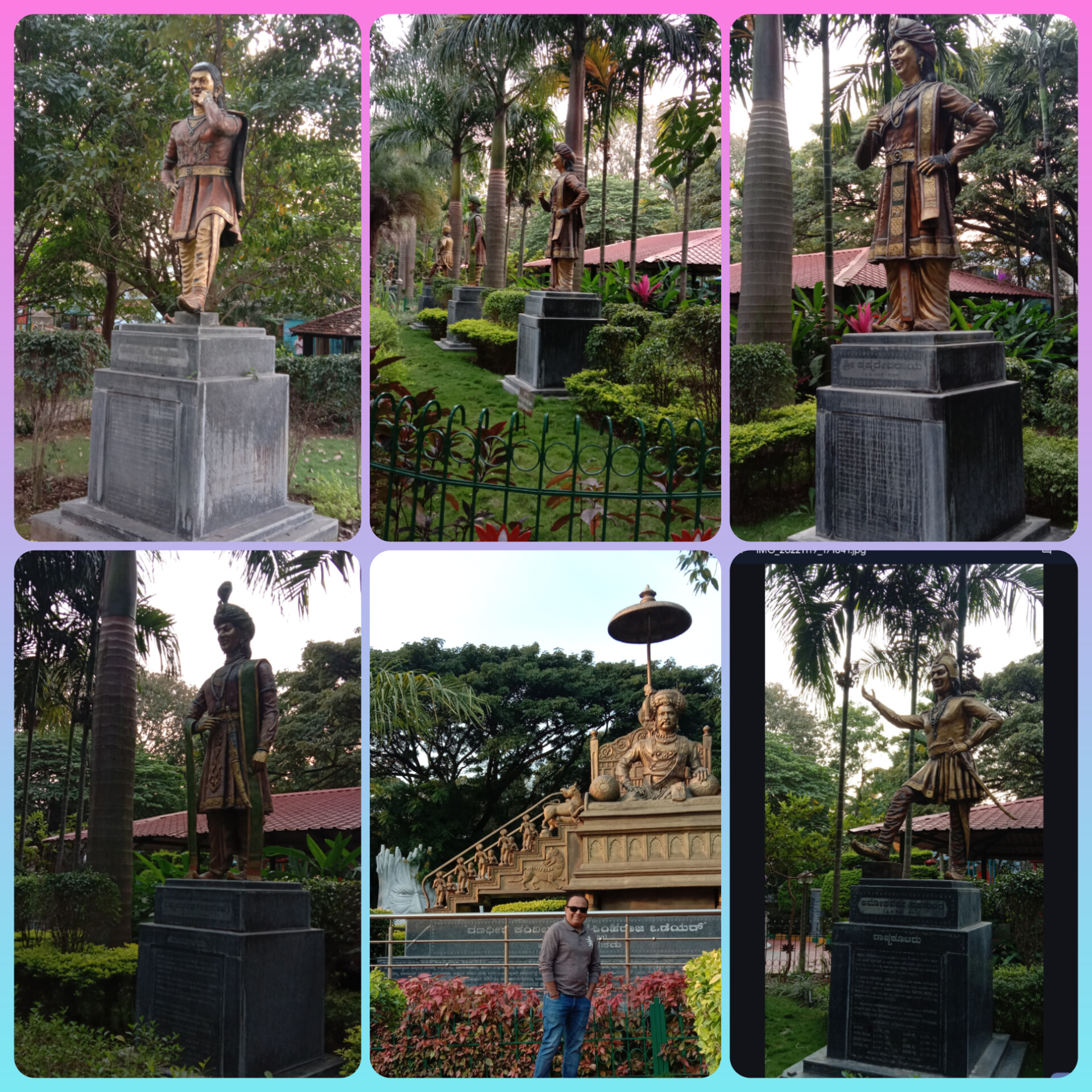
🇬🇧 The Kings of Rangoli Garden
This garden in Bangalore is not just green — it’s royal.
Scattered among the palms stand six statues of powerful rulers from Karnataka's history.
Each one ruled in a different century, but they all share a common legacy:
courage, culture, and vision.
You'll meet:
– Amoghavarsha Nrupathunga (815–880 CE),
the Rashtrakuta emperor and patron of Kannada literature.
– Nripatunga Balaga (approx. 9th century),
a warrior king with fierce energy.
– Sri Krishnadevaraya (1509–1529), the mighty Vijayanagara emperor —
smart, rich, loved.
– Sri Chikkadevaraja Wodeyar (1673–1704), ruler of Mysore,
known for reforms and military skill.
– Kempegowda I (1510–1569), the visionary who founded Bangalore.
– Kittur Rani Chennamma (1778–1829) —
the fierce queen who led an armed rebellion against the British before Rani Lakshmibai did.
Their poses are alive. Their eyes still challenge time. And their presence —
it’s not just history. It’s identity.
---
🇺🇦 Королі з Rangoli Garden
Цей парк у Бангалорі — не просто зелень, а справжній музей під відкритим небом.
Шість монументів стоять між пальмами — шість постатей, що сформували Карнатака.
Серед них:
– Амогаварша Нрупатунга (бл. 815–880),
імператор Раштракутів і покровитель каннада-культури.
– Нрипатунга Балага, войовничий правитель, живий символ сили IX століття.
– Крішнадеварая (1509–1529), великий імператор Віджаянагара, мудрий і щедрий.
– Чіккадеварая Водеяр (1673–1704), правитель Майсура, що зміцнив армію і казну.
– Кемпеговда I (1510–1569), засновник Бангалора, що побудував місто з нуля.
– Кіттур Рані Ченнама (1778–1829) —
хоробра цариця, яка кинула виклик Британській імперії.
Вони мовчать — але не мовчазні. Вони — дух землі, на якій ти стоїш.
...
...
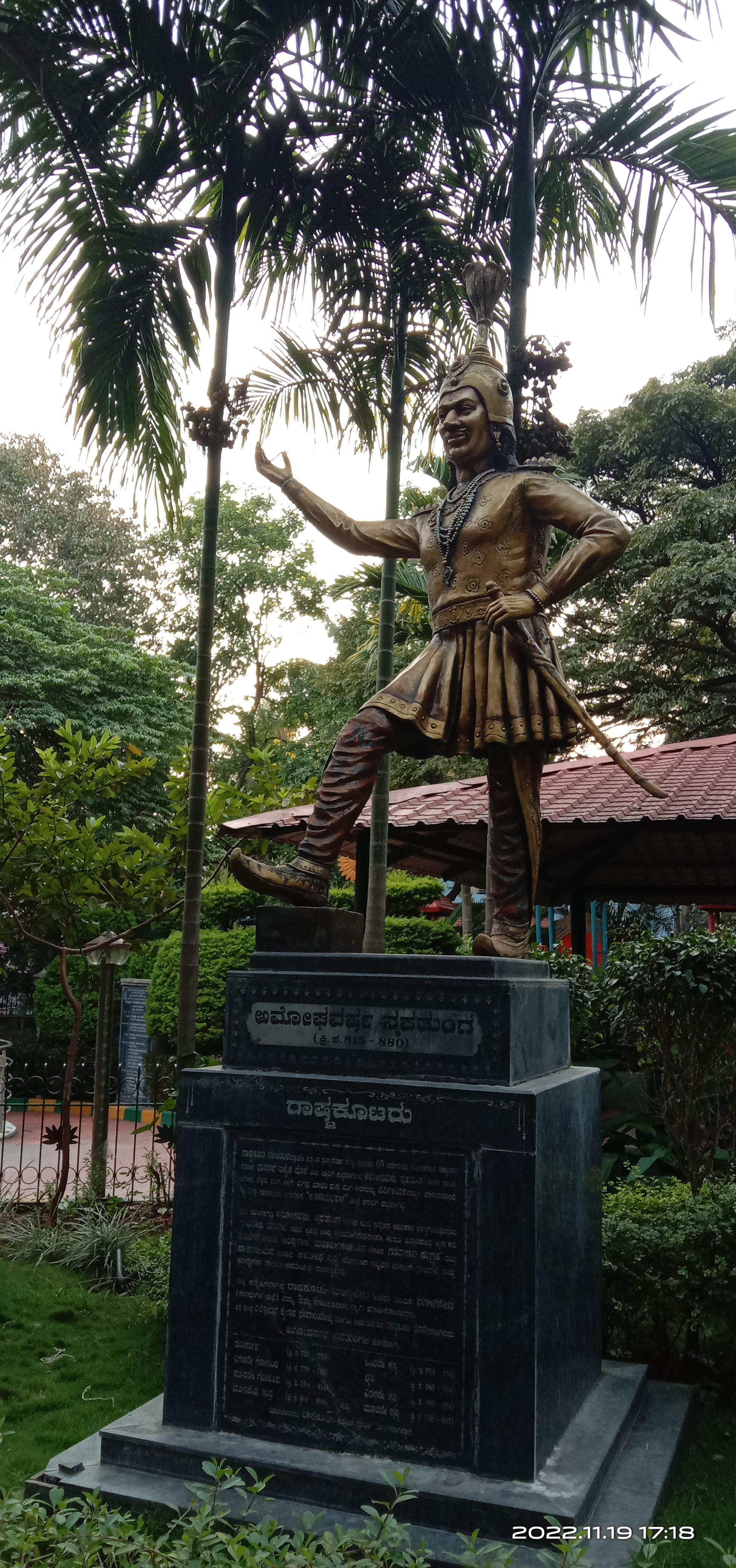
🇬🇧 Amoghavarsha I —
The King Who Chose Words Over War
Among all the statues in the park, his caught my eye.
Not because he looked the strongest — but because he seemed the calmest.
This was Amoghavarsha I, a king from the 9th century who ruled not with a sword,
but with silence, poetry, and peace.
They say he was a follower of Jainism —
a religion of deep inner discipline and non-violence.
He ruled for over 60 years and hardly fought any wars. Instead, he wrote Kavirajamarga,
the first major book in the Kannada language.
Imagine that —
a king who sat on a golden throne and wrote about beauty, truth, and the art of expression.
Standing in front of his statue, I didn’t feel small.
I felt seen.
---
🇺🇦 Амогаварша I —
Король, що обрав слова замість війни
Серед усіх статуй у парку його я запам’ятала найбільше.
Не тому що він виглядав найсильнішим — а тому що був найспокійнішим.
Це був Амогаварша I, правитель IX століття, який володарював не мечем,
а тишею, поезією і миром.
Кажуть, він сповідував джайнізм —
релігію глибокої внутрішньої дисципліни та ненасильства.
Він правив понад 60 років і майже не воював.
Натомість написав Kavirajamarga — першу велику книгу каннада-літератури.
Уяви: король на троні, який пише про красу, істину та силу слова.
Стоячи перед його статуєю, я не почувалась маленькою.
Я почувалась — поміченою.
...
...
...
It's time for dance
Dancing in my zone. No stage. Just presence
